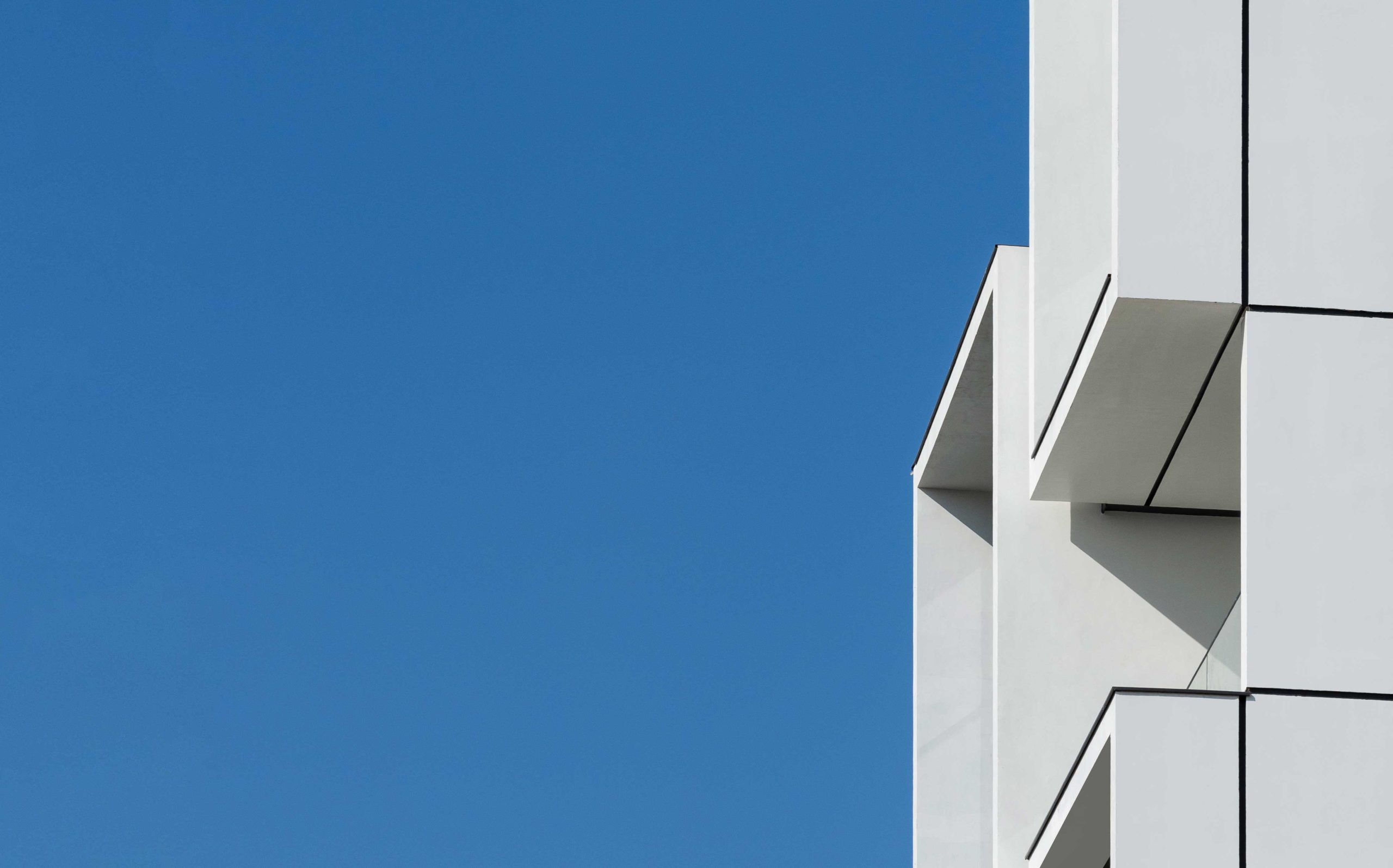
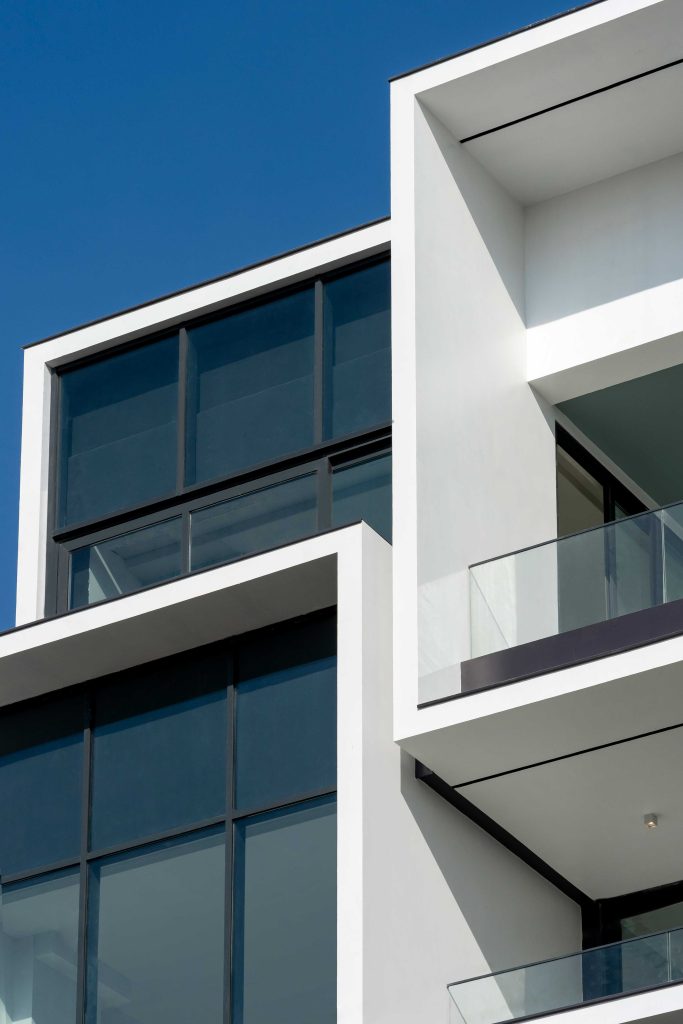
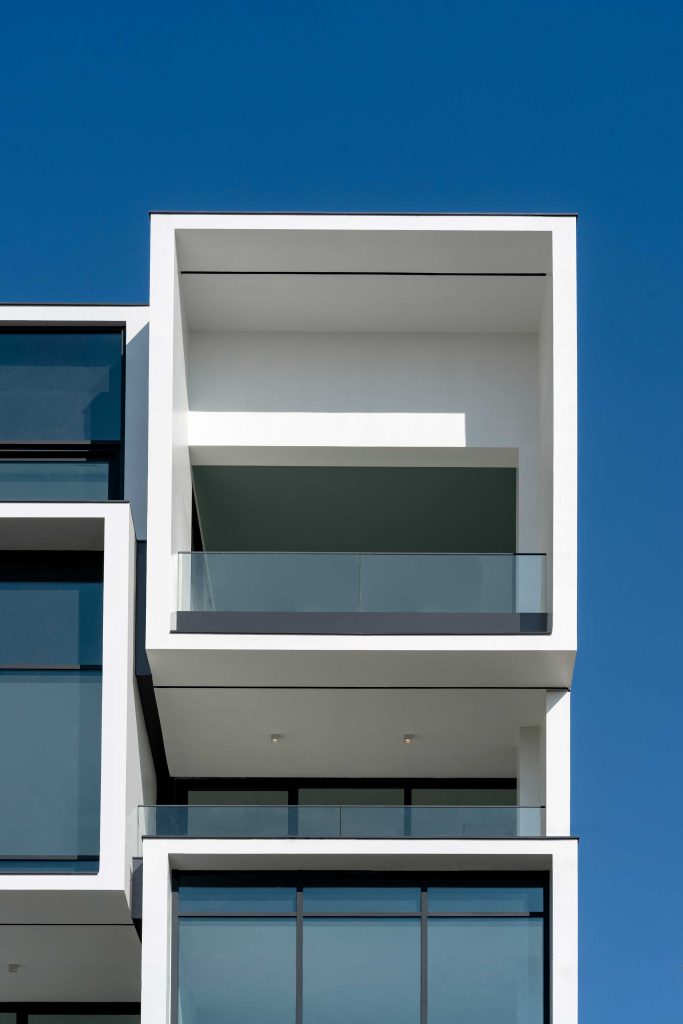
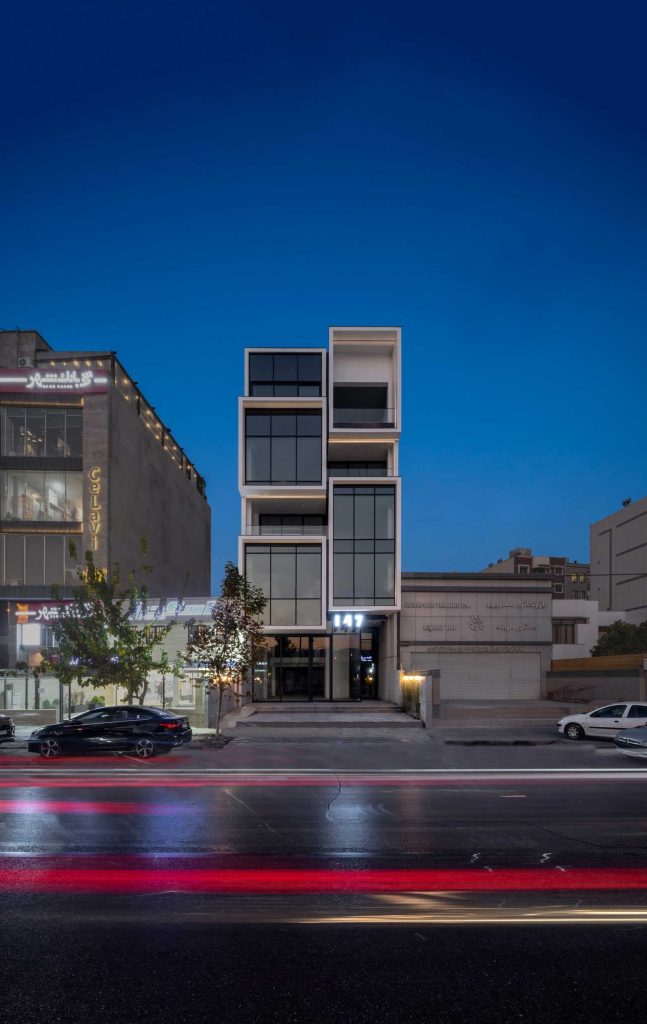
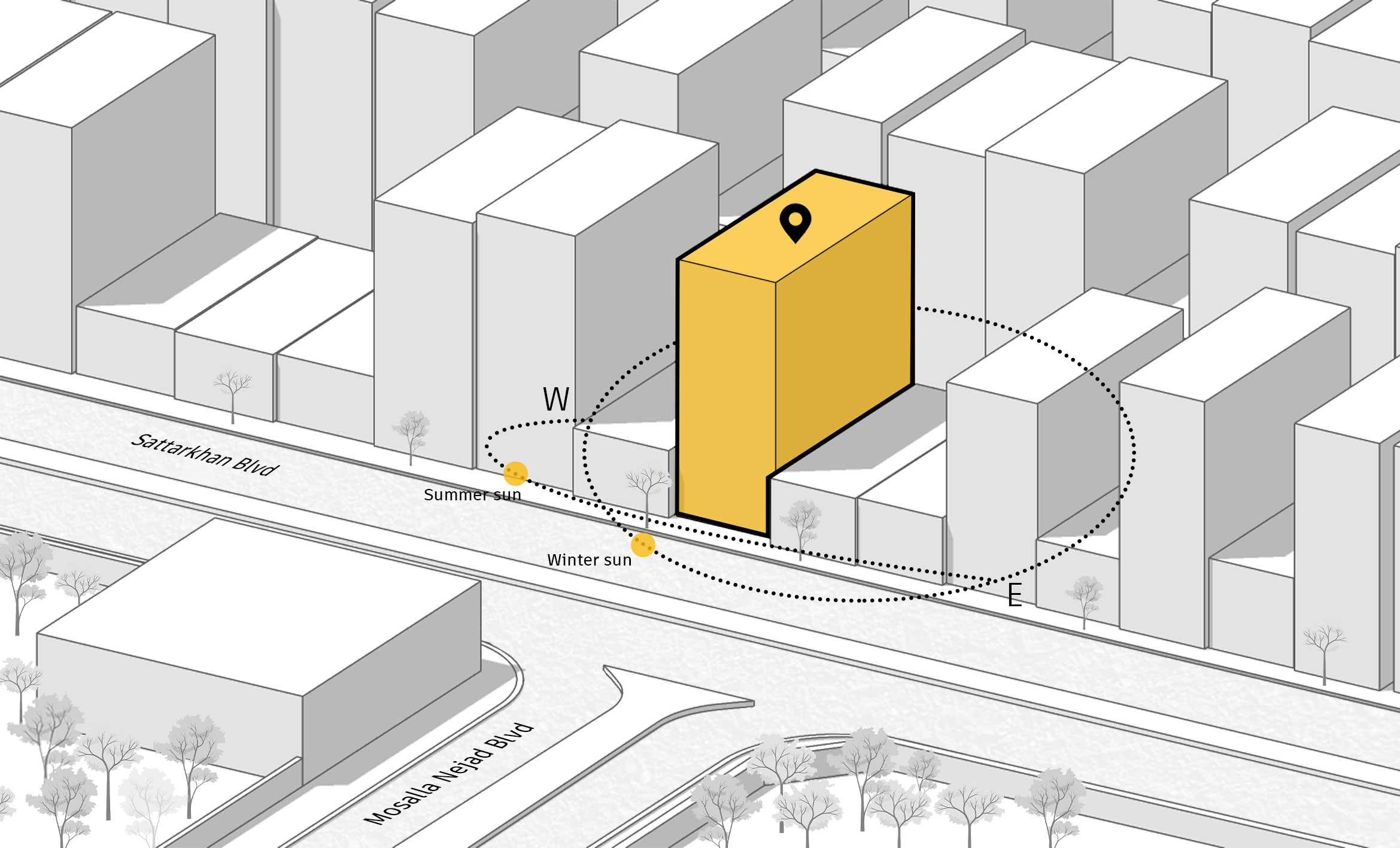
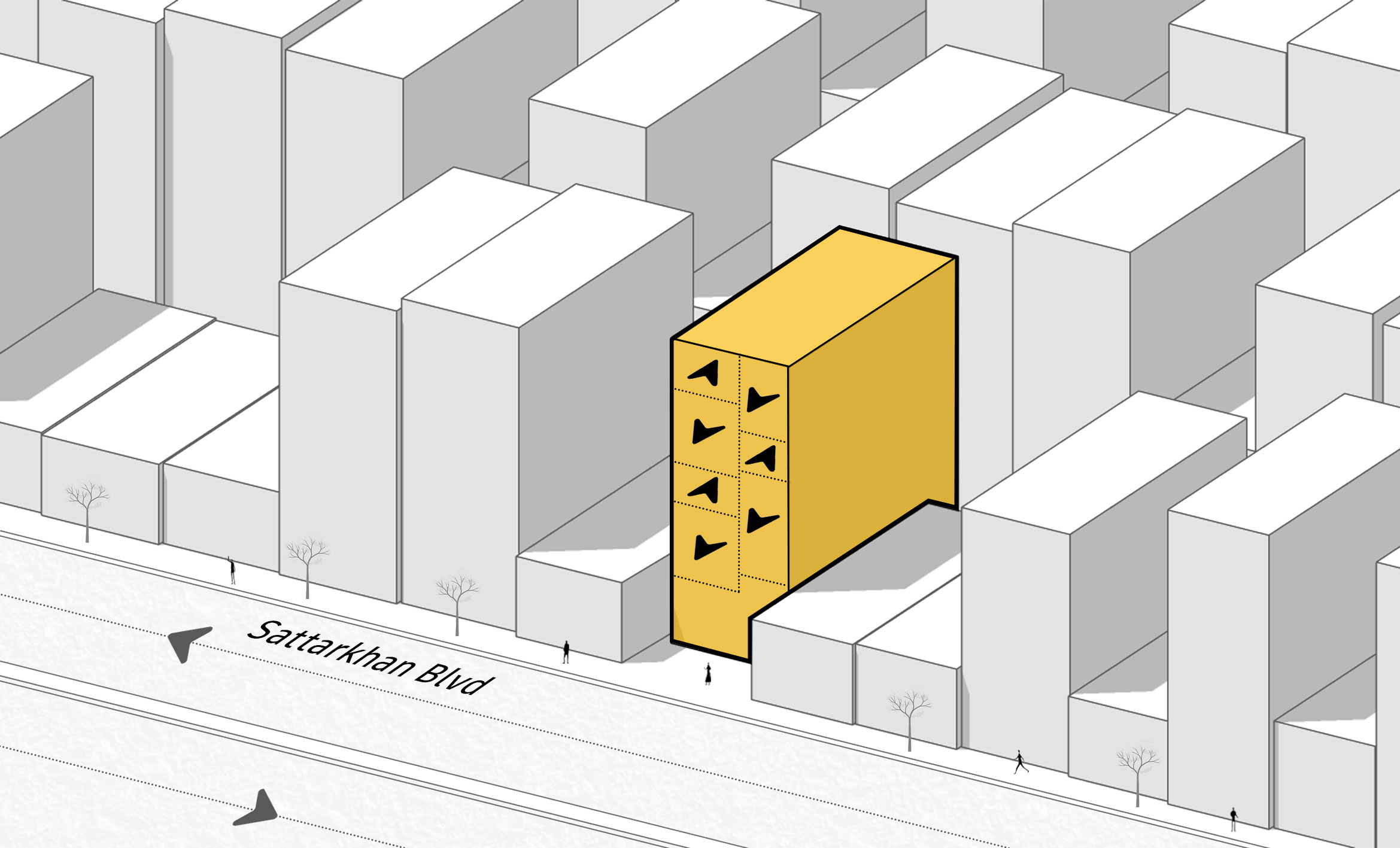
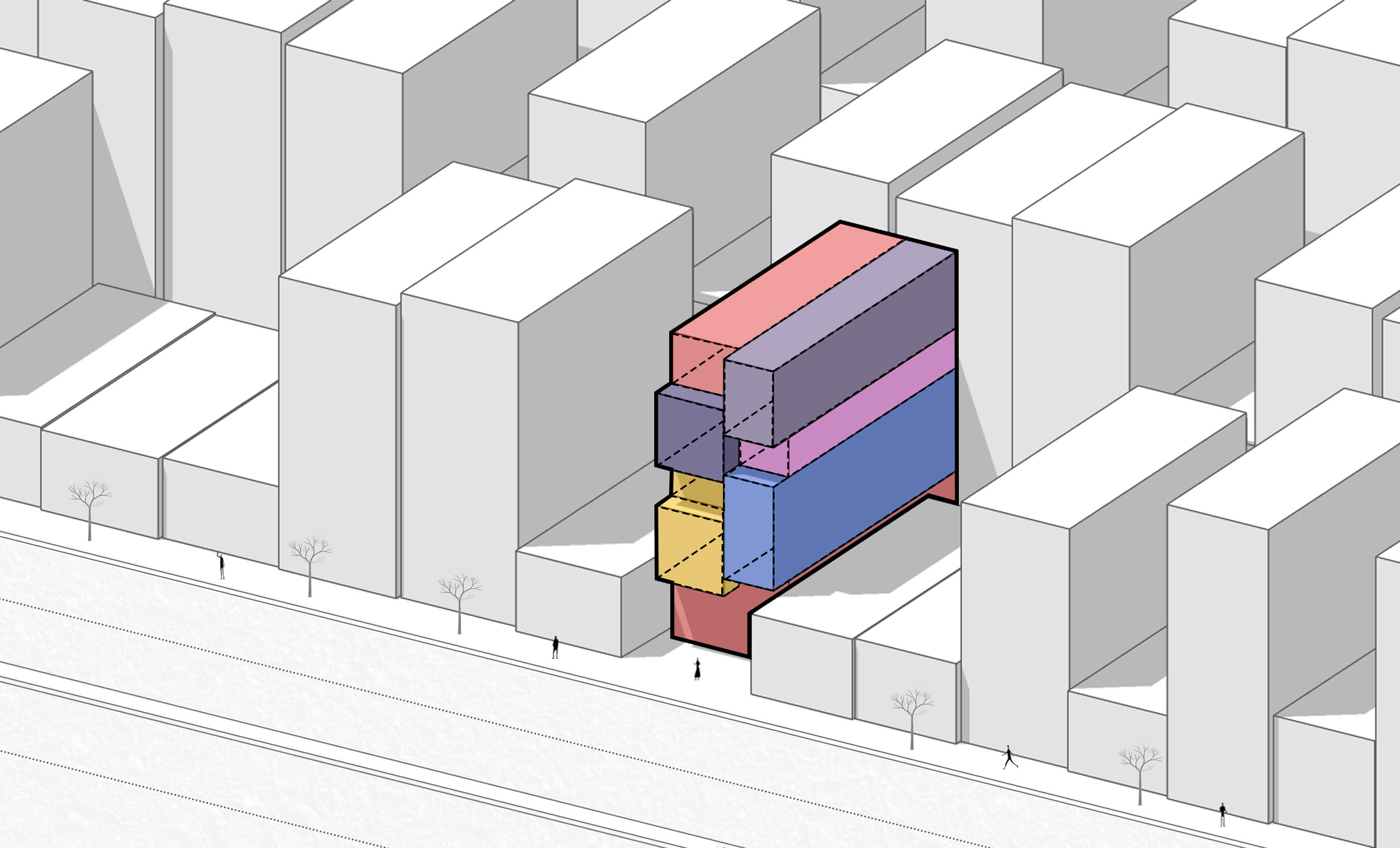
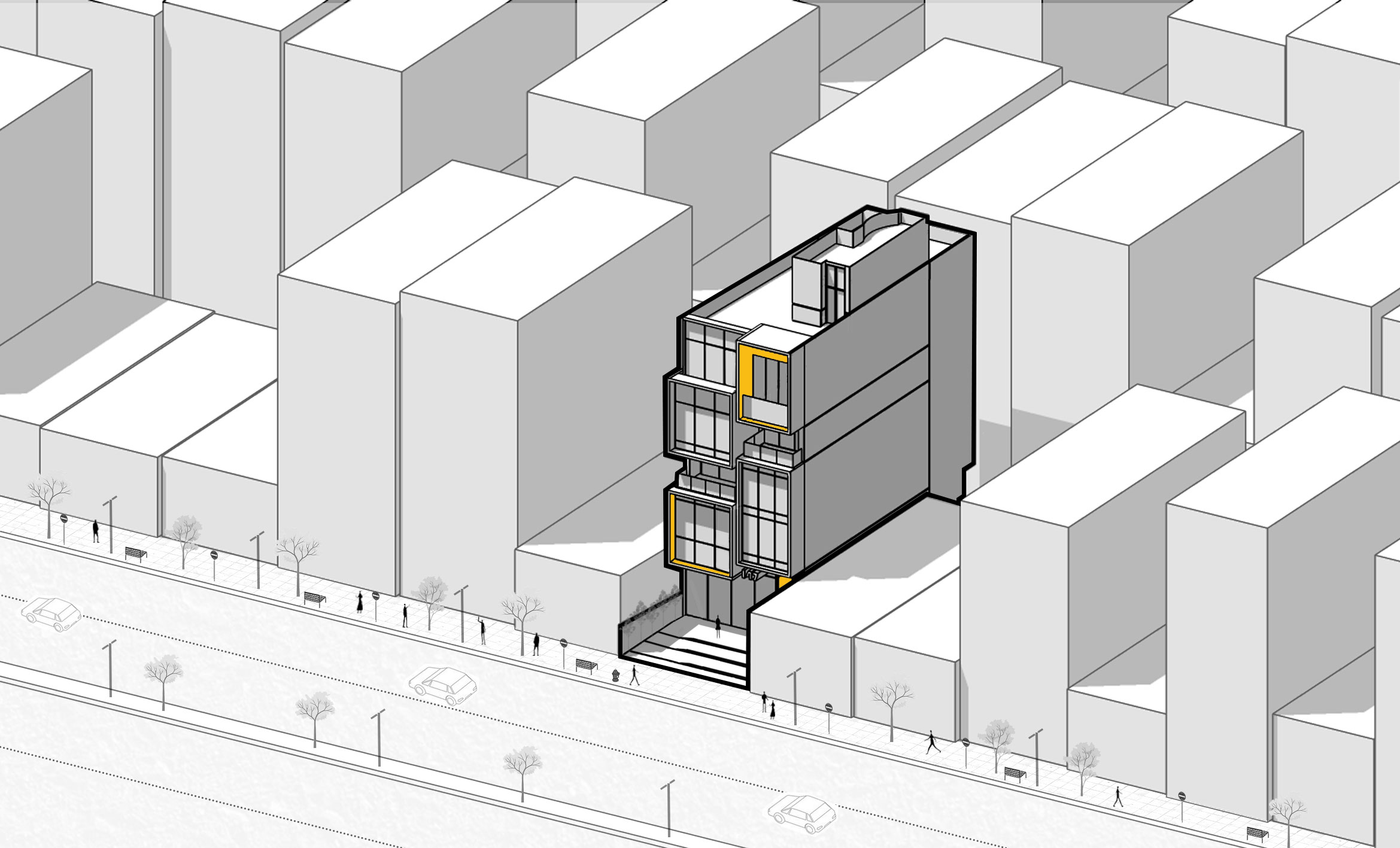
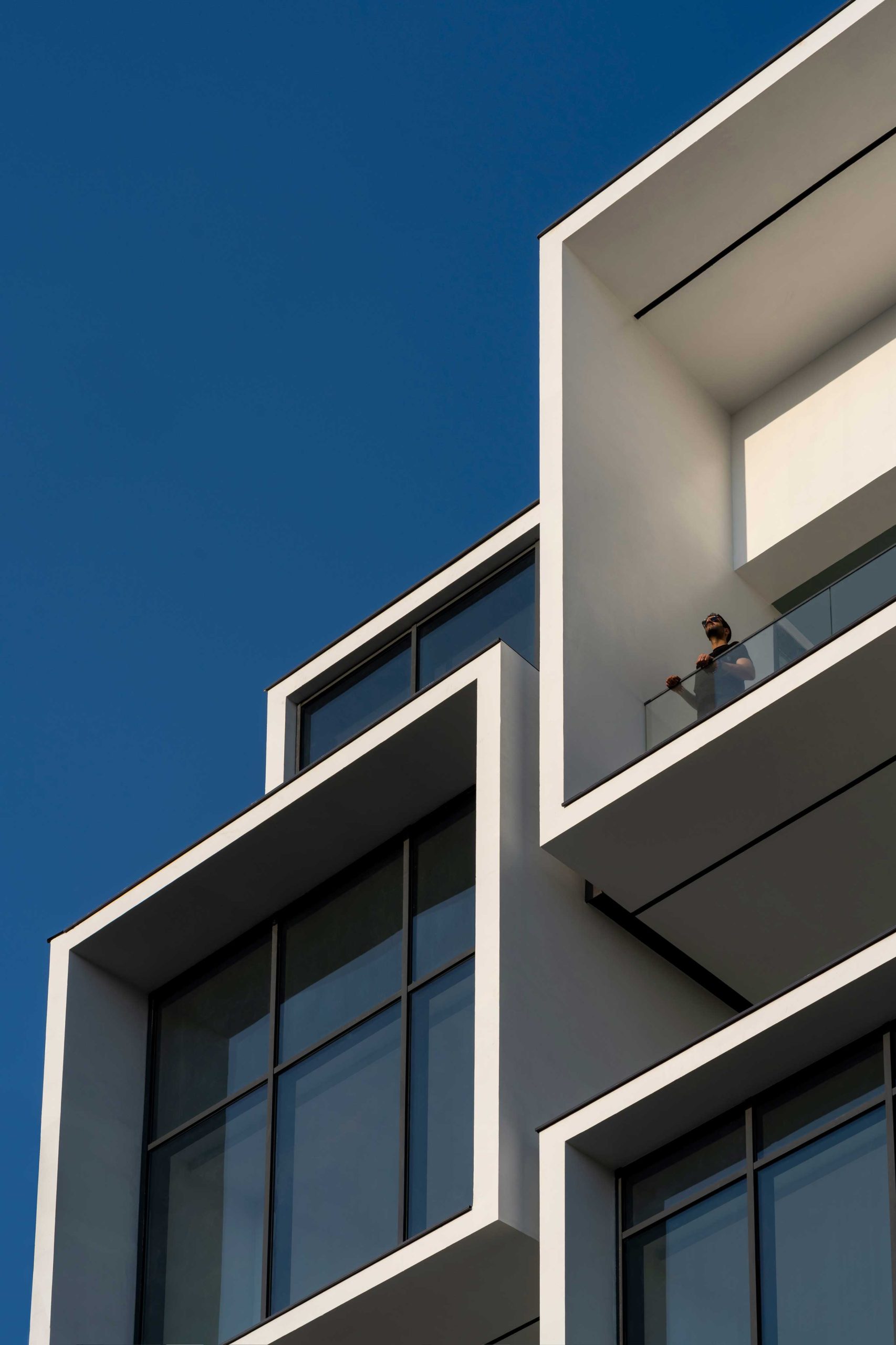
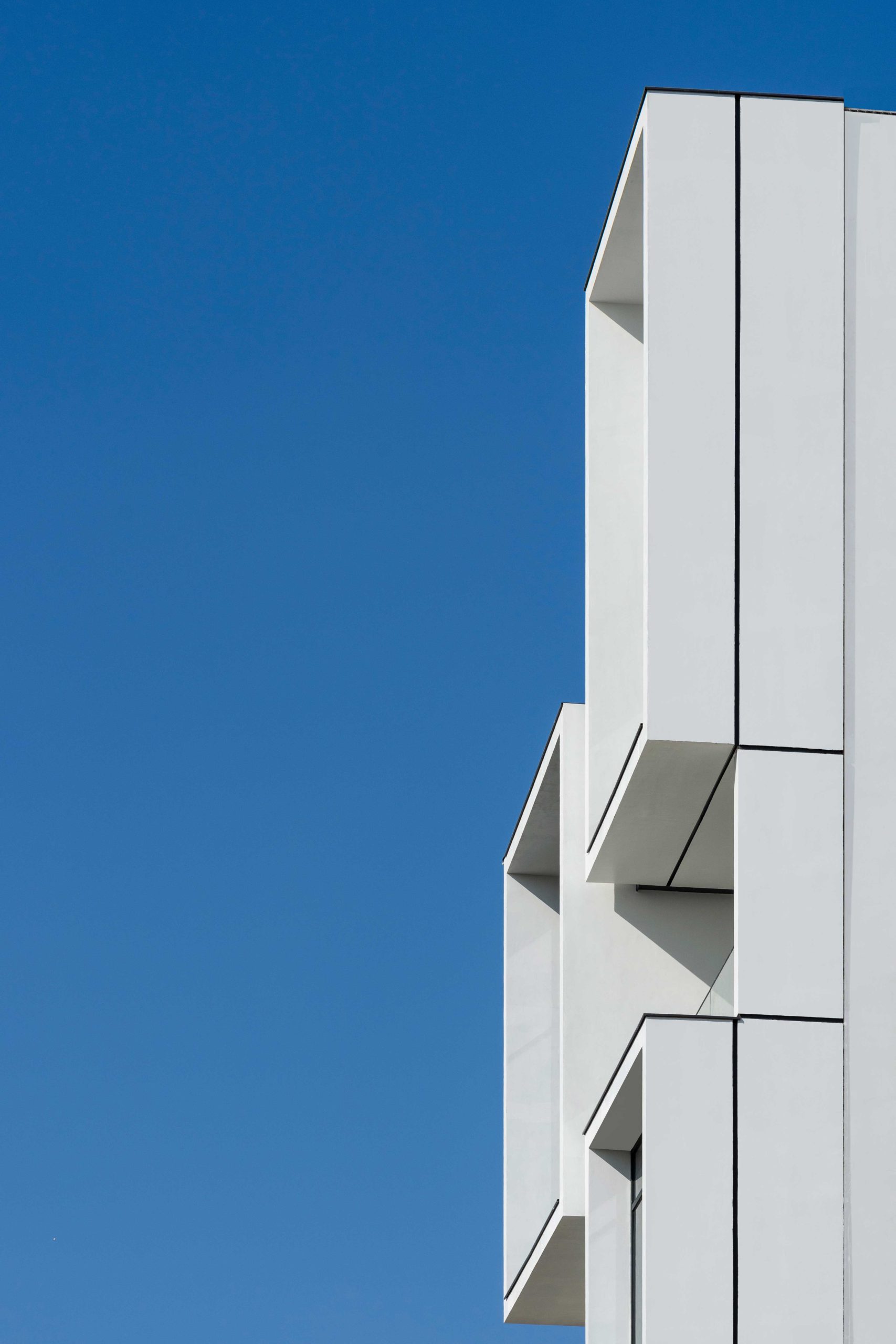
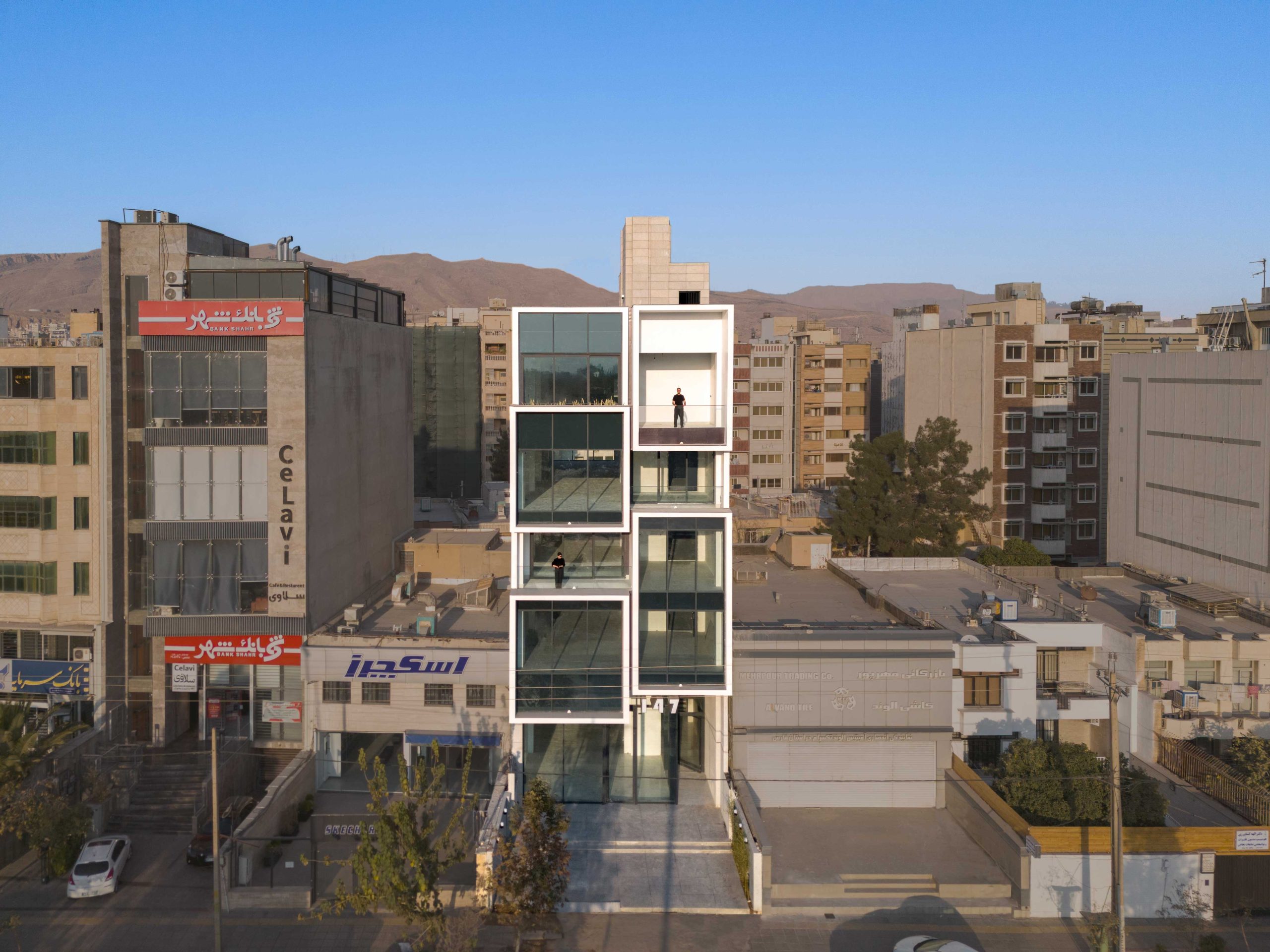
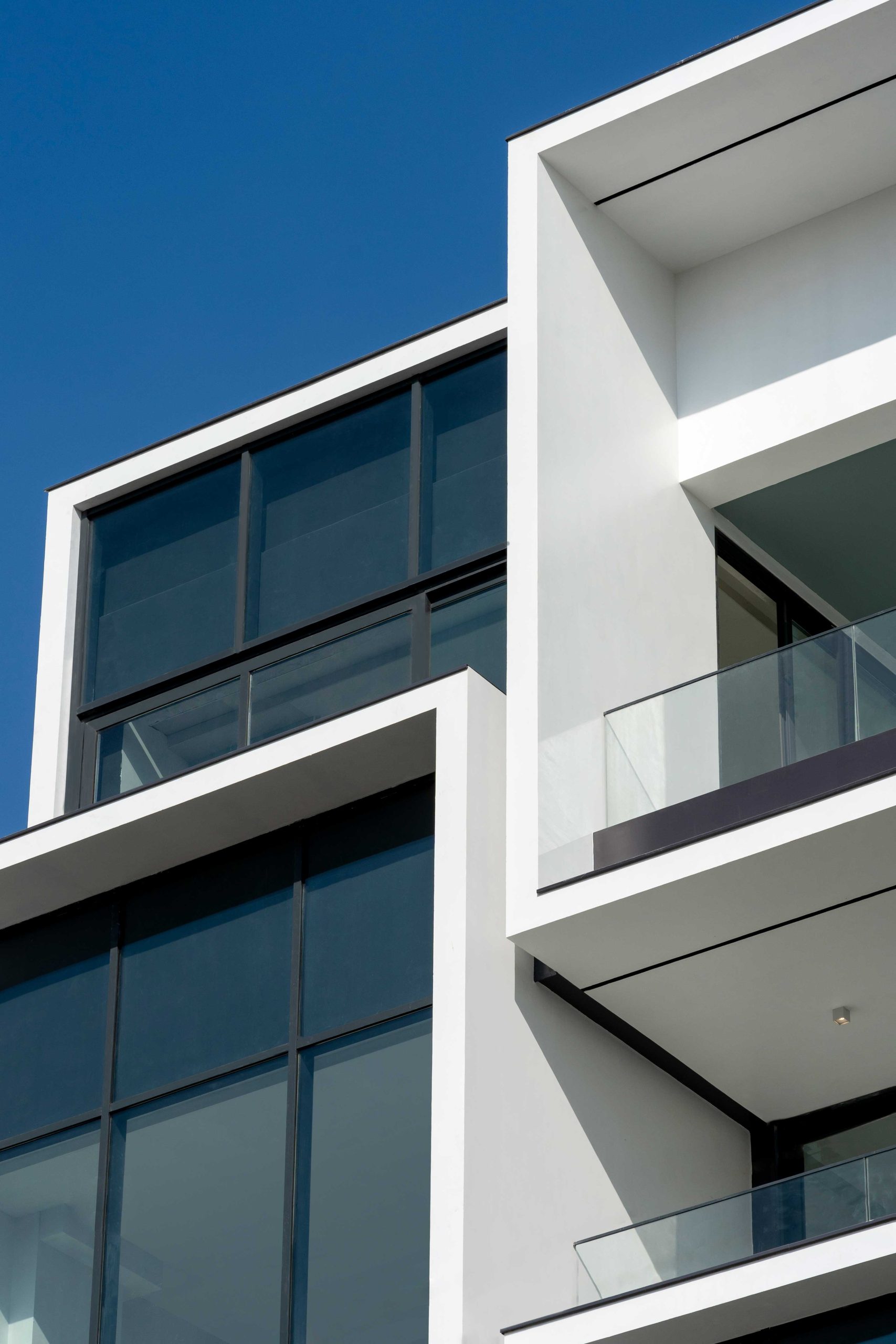
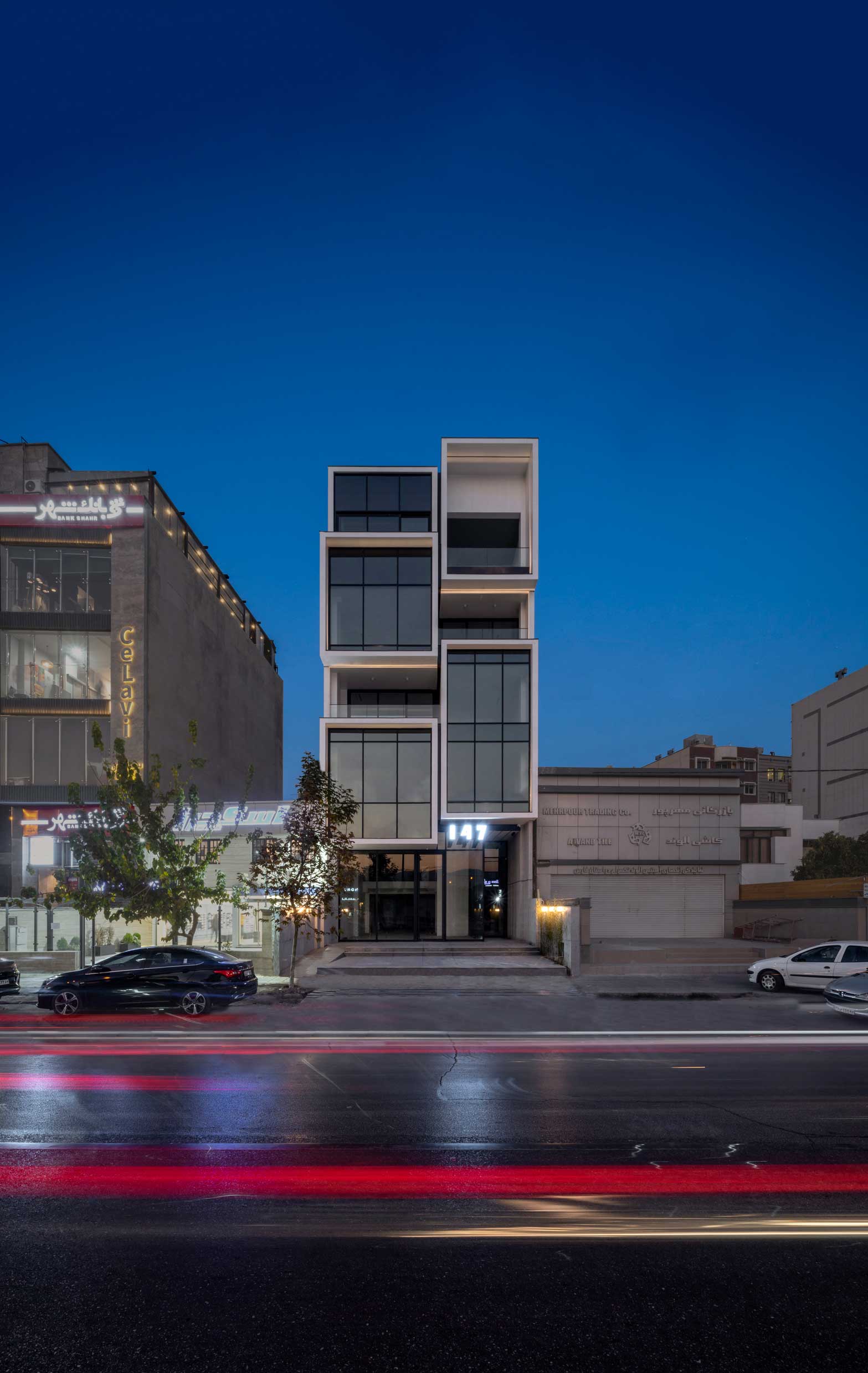
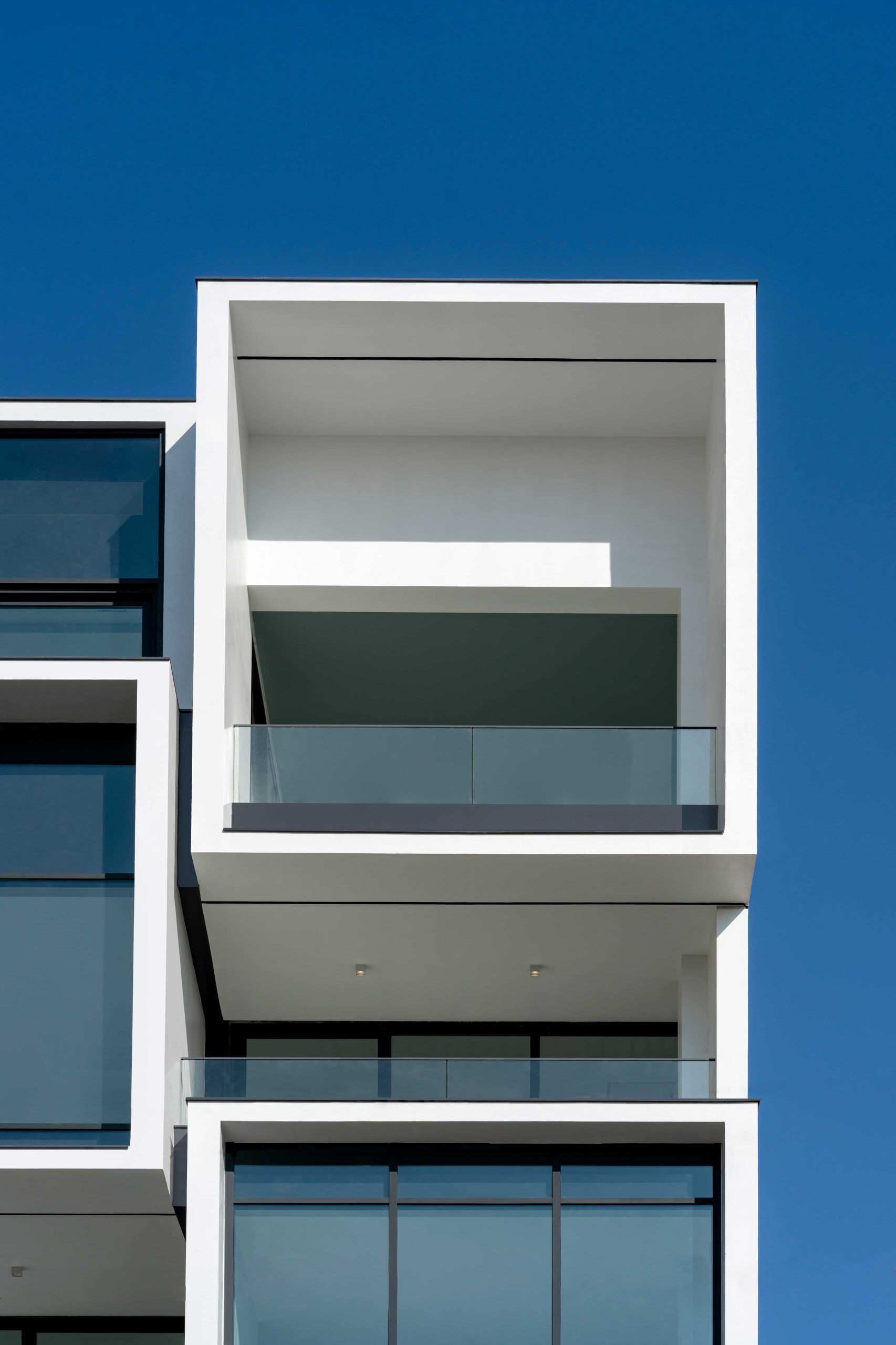
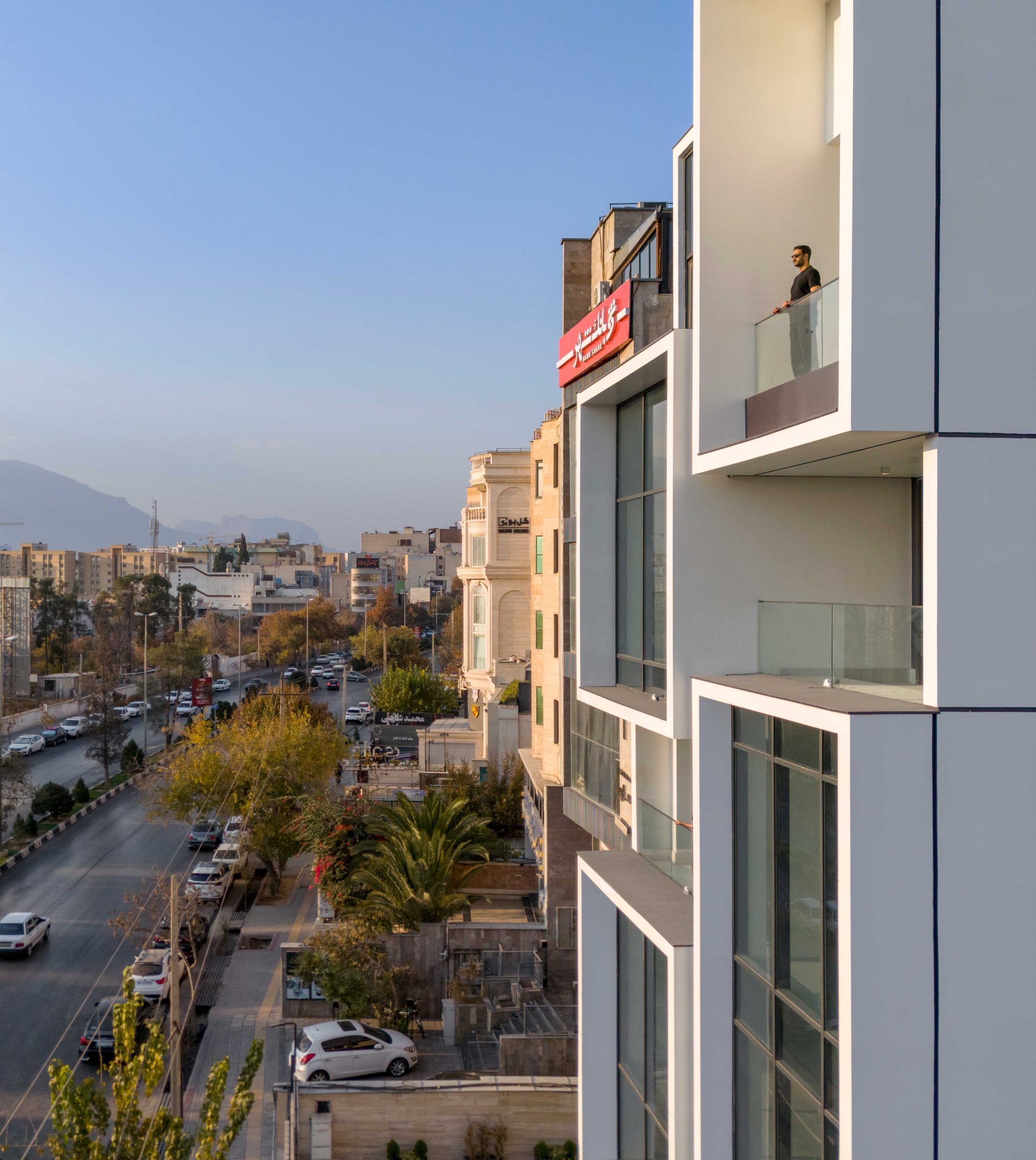
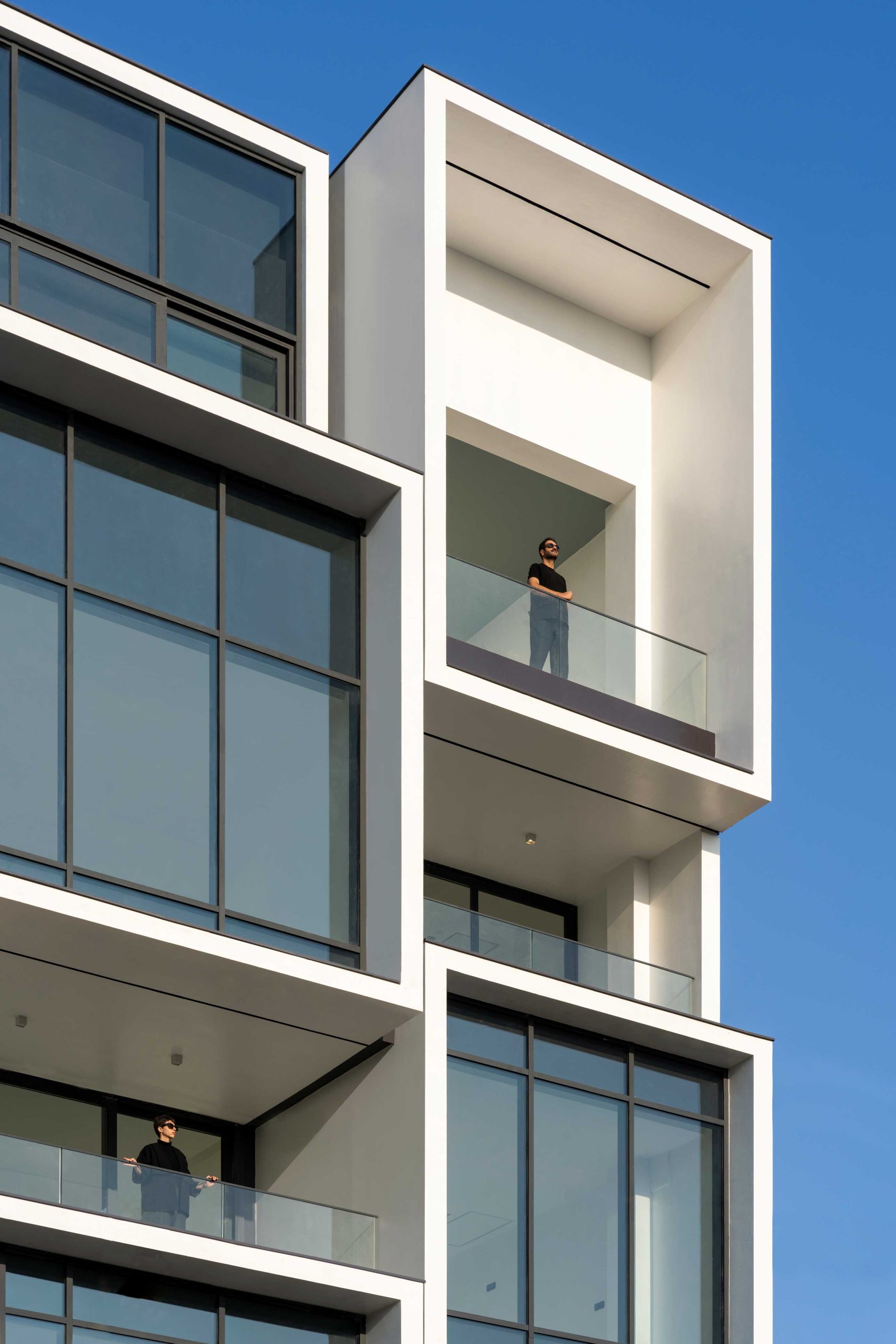
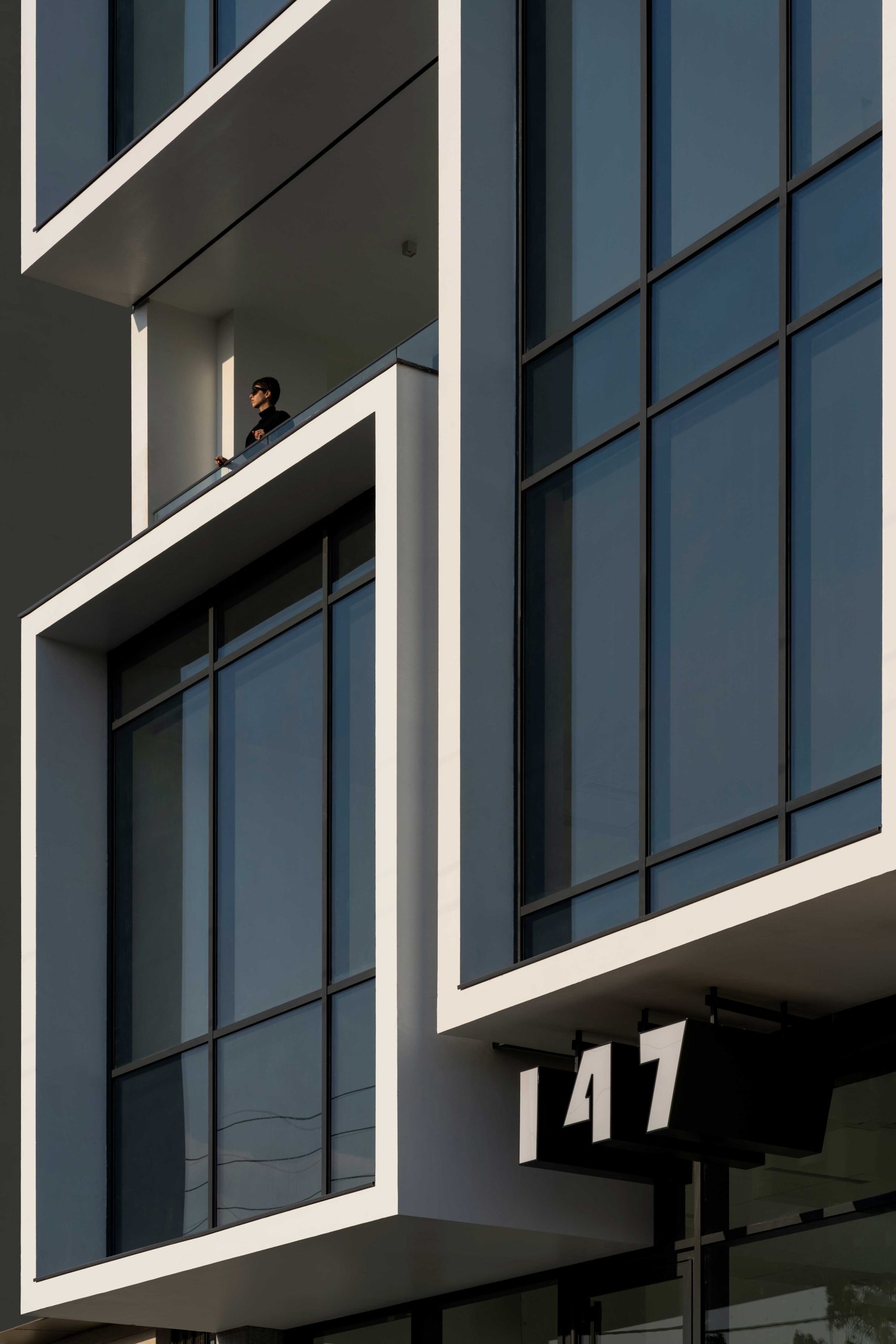
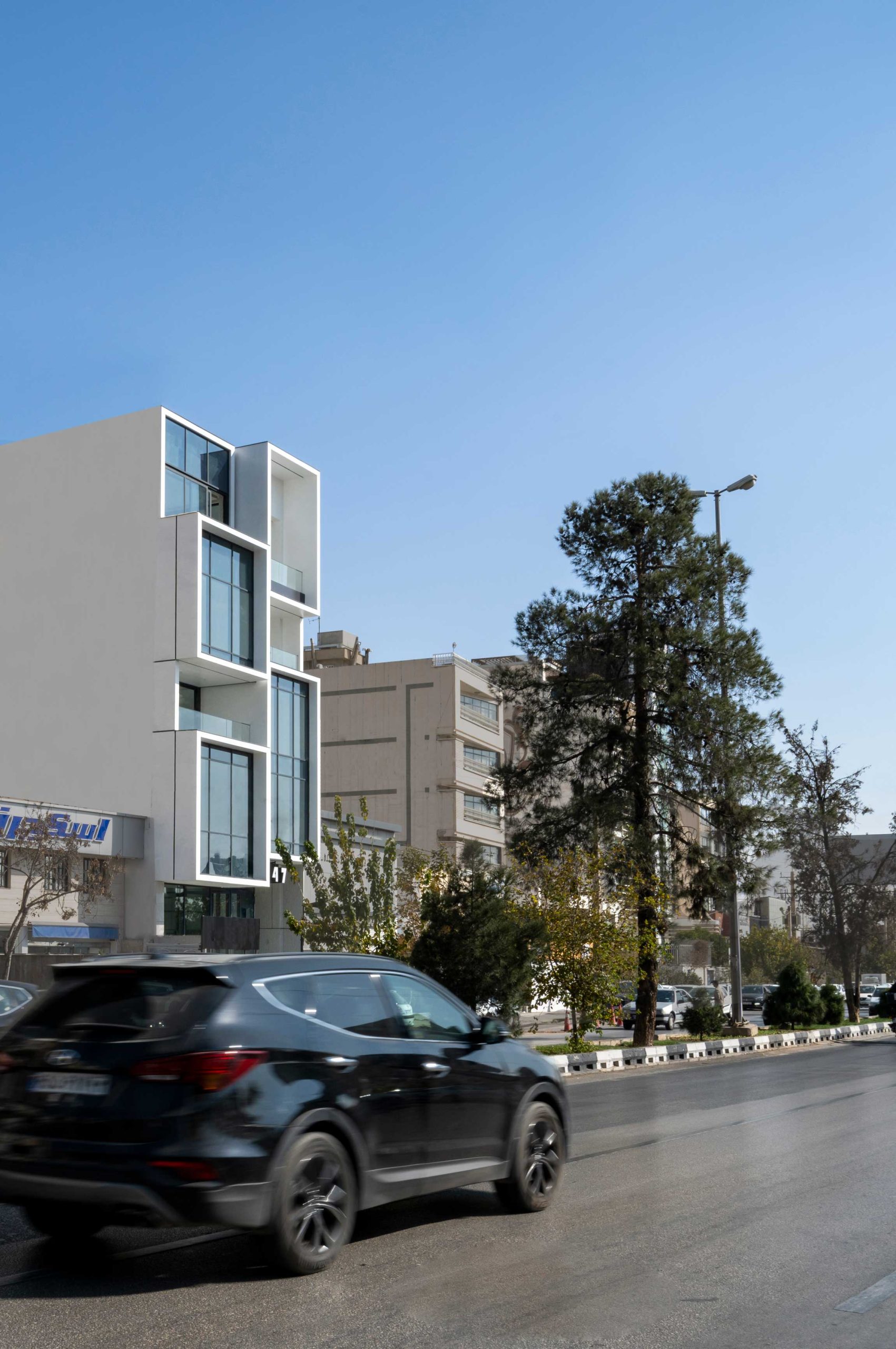
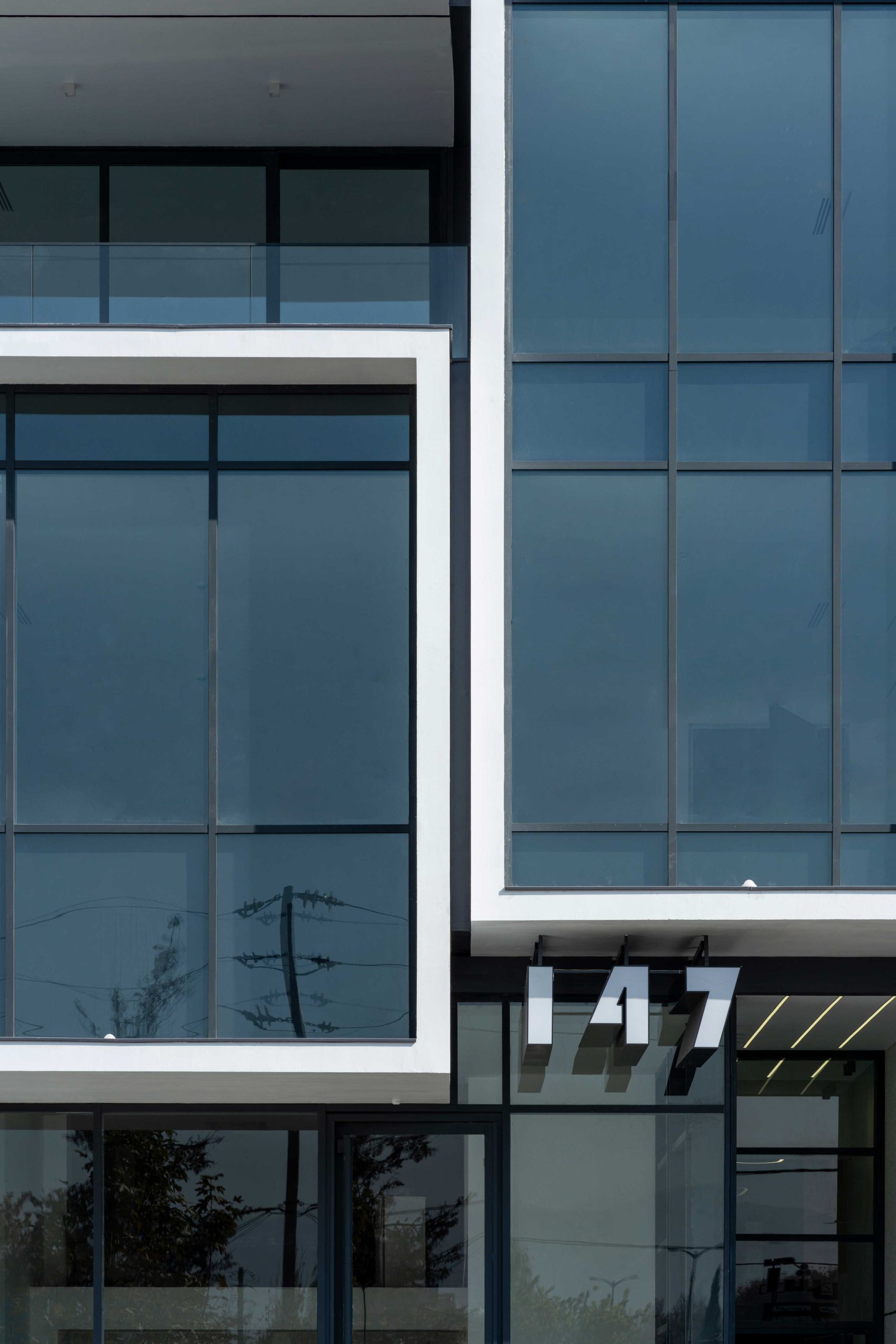
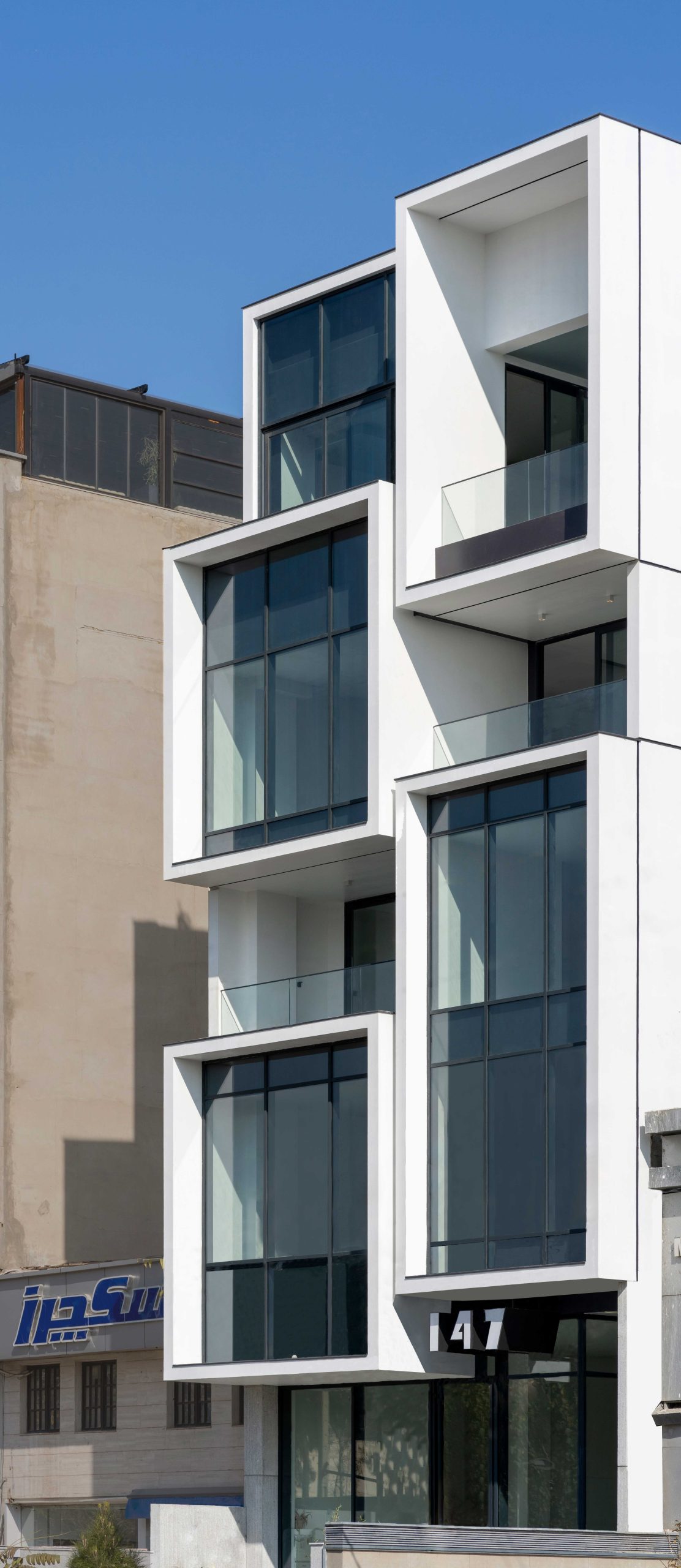
Given the elongated proportions of the site and the pre-constructed skeletal frame, the design challenge centered on deepening the building’s façade and creating a meaningful spatial dialogue with the city and the gardens across the street. To address this, the building’s volume was divided longitudinally into two main segments, allowing for deep terraces to alternate between the eastern and western façades. This strategy not only enhanced the façade’s spatial depth but also introduced a layered and dynamic quality to the massing.
These sectional divisions were framed within continuous white boxes, and by dissolving the rigid horizontal separations between floors inside these frames, the design aimed to generate spatial variability and diverse openings toward the street and the garden beyond. On the uppermost level, the absence of a completed structural frame provided the opportunity for further setbacks and larger semi-open terraces, offering open and transitional spaces for light, air, and interaction.